Uncategorized

Location-Profile

Introducing Locobuzz Location Profile: Turn Every Outlet Into a Smart CX Hub

A study conducted by Deloitte uncovers that 80% of consumers expect personalized experiences tailored to their local context. Yet, most brands still look at feedback from a countrywide point of view. Thus, missing critical insights that individual locations can offer. Each outlet of your brand is a gold mine of data and customer-centric touchpoints that can unlock new revenue and growth opportunities.  This is where Location Profiles transform your approach. It offers a centralized, real-time dashboard of every outlet’s Google My Business (GMB) & social media mentions, reviews, and customer feedback. Thus, empowering you to pinpoint and resolve issues precisely where they occur. Because in today’s hyper-connected world, staying local truly matters. And with Location Profiles, you’re equipped to protect your brand’s reputation and revenue at the most granular level. The CX Disconnect Between HQ and Local Stores While your central team at the HQ is strategizing and busy tracking complaints & reviews, there’s something happening at the local level that they’re completely unaware of. In today’s day and age, 76% of consumers look at online presence before physically visiting a business. This is the importance of managing local stores. Some key drawbacks that your brand currently might be facing are What you might be missing: Local-Level Challenge Impact on Brand Reviews and complaints go unnoticed at outlet level Customer trust is damaged before HQ even detects the issue. Competitors respond faster to Google reviews at local outlets They gain more visibility and foot traffic, while your brand falls behind. Poor experience at one location Tarnishes the perception of the entire brand, despite overall HQ strategy. Undetected patterns like rising complaints or dropping ratings in a region Leads to revenue loss before action can be taken. Generic responses to specific local issues Customers feel unheard, leading to frustration and churn. High-performing branches build loyalty, but under-monitored ones erode it Inconsistent CX leads to long-term brand trust issues. What Locobuzz Location Profile Can Unlock for You! Location Profile by Locobuzz turns every outlet into a smart CX hub so that you never miss a complaint, a compliment, or a competitor’s move, no matter the pin code. Here’s everything you can unlock with Location Profile. Central Command, Local Control Unify outlet-level CX into one real-time dashboard – empowering local teams to act fast while your HQ stays informed. Competitive & Internal Benchmarking Compare outlets with each other and local competitors to spot stars, stragglers, and trends. Geo-Tagged Customer Intelligence Merge reviews, surveys, and social buzz into location-wise insights that reveal where you’re winning or losing the CX battles. Instant Alerts & Faster Responses Never let a bad review fester. Get notified in real time so your teams respond before it affects ratings. AI-Powered, On-Brand Replies Automate personalized responses to reviews and social mentions while maintaining tone, accuracy, and empathy. Boost Local Search Rankings Outlets that reply quickly and engage well rank higher in Google Maps – driving visibility and conversions. Govern at Scale with Local Accountability Assign outlet-level roles, automate SOPs, and hold every store, whether franchise or owned, accountable for customer reviews. Maximize ROI on Every Campaign Whether it’s a Diwali promotion in Surat or a launch in Hyderabad, track how customers are responding, location by location. Success Stories, Geo-Mapped and Delivered! Don’t believe us? Just ask the brands who stopped guessing and started geo-tracking their CX. Leading Automotive Giant Challenge With over 1200 dealership locations across India, the automotive giant faced a growing gap in consistent customer experience. Disparate response times, uneven quality of replies, and lack of unified service standards were eroding customer trust – especially across social and digital channels. Solution Locobuzz deployed SLA-driven Generative AI response systems across 200+ high-traffic showroom locations. With centralized monitoring and intelligent automation, every dealership began operating on the same high-performance playbook – ensuring consistent, on-brand customer communication at scale. Impact Response Time improved by 87% Faster replies, fewer drop-offs, and smoother customer journeys. Customer Satisfaction (CSAT) jumped by 32% Customers noticed the difference—and rated it higher. Global Coffee Chain Challenge Multiple feedback touchpoints – online reviews, in-store comments, and app ratings – made it difficult to get a clear view of customer sentiment. With no unified system in place, valuable insights slipped through the cracks, and there was no structured way to retain or reward loyal customers. Solution We rolled out QR-based real-time feedback across high-footfall urban outlets. Customers could instantly share their experience with a quick scan – no app, no friction. Behind the scenes, this feedback triggered smart loyalty workflows: thank-you messages, surprise rewards, and tailored offers based on customer sentiment and visit history. Impact Repeat Visits ↑ 45% Customers came back more often, driven by instant recognition and personalized incentives. Feedback Volume ↑ 215% Easy access and real-time responsiveness made more customers want to engage. Indian Cosmetics Brand Challenge Customer feedback was all over the place – scattered, siloed, and barely making it to the top. Visibility at a central level? Minimal. Solution Introduced hyper-local engagement across 500+ salons – while giving the central team a bird’s-eye view. Real-time insights, faster fixes, and happier customers. Impact NPS soared by 22 points 95% Service Recovery Success fast, effective, and consistent. Who Needs This? If you’re in one of these roles, Location Profile can be your new superpower: Leadership & CX Heads Drive strategic customer experience improvements with deeper insights with Location Profile. Manage multiple locations and track individual outlets performance. Regional & Zone Managers Monitor performance across locations and make data-driven decisions that keep your regions running smoothly. Digital Marketing Leads Optimize local presence on Google My Business, Maps, and reviews to boost brand reputation and foot traffic. Franchise Owners & Multi-location Operators Ensure consistency and quality in customer experiences across your entire network. Operations Teams & Store Managers Connect customer feedback directly to in-store processes and SOPs for continuous improvement & boosting the branch growth. Turn Every Outlet into a CX Powerhouse with Location Profile In the era of hyper-personalized experiences, Location Profiles brings you the precision

Introducing Locobuzz Location Profile: Turn Every Outlet Into a Smart CX Hub Read More »

Why Your Chatbot Needs Brand Voice And How To Build It

Whenever a customer visits a website, they can be greeted in 2 different ways through a chatbot: Hello, I am your assistant for today. How can I help you? Hey there! So glad to see you today. Thanks for stopping by! If you need any help finding something, just ask. We’re here for you! These two greetings create very different customer experiences. Most businesses prefer the second approach because it feels more approachable and builds a stronger connection with visitors, encouraging them to stay longer on the website. Here’s what that means in practice. By giving your chatbot a brand voice, your brand can really stand out. This can be your USP! Fun fact: 87.2% of users have positively rated their chatbot experience, with voice and tone playing a crucial role in user experience and satisfaction. Chatbot marketing is a powerful strategy used by businesses to deliver solutions to the customers’ problems. Instead of focusing solely on traditional marketing channels like emails, brands are increasingly making use of chatbots to deliver responses on time. Now, before we dive into why your chatbot needs a brand voice and how to build it, let’s take a look at what a brand voice is for your chatbot. What is a Brand Voice for your Chatbot? In the context of a chatbot, a Brand Voice is a unique tone, style, and personality that your chatbot uses to connect with your customers. The values of your brand are reflected in the way your chatbot interacts with your customers. The way you speak to your customers through the chatbots reflects the value of your company and why customers should choose you over the competition. Your customers expect your brand to communicate in a certain way. The choice of words and the writing style must be influenced by your brand.  Now, let’s take a detailed look at why your chatbot needs a brand voice. Why Does Your Chatbot Need a Brand Voice? Chatbots are the most effective way to handle communication with your customers. From simply answering questions to helping customers through complex tasks, chatbots are helpful at every step. However, as effective as they are, there is a way in which normal communication can be turned into an interactive and interesting conversation. This is where having a brand voice for your chatbots becomes essential.  Chatbot marketing makes use of automated chat systems powered by AI to engage with customers, promote products and services, and guide users through various tasks. Unlike traditional marketing, chatbot marketing becomes a two-way communication with your customers. Listed below are a few compelling reasons why you should give your chatbot a brand voice: Creates a Human Experience: Chatbots are often too robotic and impersonal. They need to be made more interactive and brand-friendly. A humanized chatbot creates more engaging conversations with customers. The tone and style of the conversation become more interactive. This makes the customers feel more comfortable and improves their overall customer experience. Generates Consistency across Customer Points of Contact: There are various communication channels of your brand where chatbots are installed for your customers. Generating consistency in the tone of the chatbots across all the channels is important. If the tone is inconsistent across various platforms, this may create confusion for the customer. Most times, customers recognize your brand purely by the way your communications have made them feel about you. So, the more consistent you keep your communication, the better the chances of your customers remembering you. Enhances Customer Engagement: An interactive chatbot enhances customer engagement and makes the customer more likely to communicate with the chatbot. The satisfaction level of the customer increases as chatbots become more engaging.  Differentiates your Brand from your Competitors: A unique chatbot having a distinct brand personality becomes a USP for the brands. Customers are more likely to see this distinction, as it largely depends on customer service. Helping customers strengthens your brand position. Builds Trust and Emotional Connection: Customers are humans at the end. They look for brands that will connect with them and make them feel heard. Chatbots having a unique brand voice help brands create this trust and connection with their customers. How To Build a Brand Voice for Your Chatbot Define brand’s core identity:  A brand’s core identity goes beyond logos, taglines, and visual elements. You can start by identifying the core values that create an identity for your brand. Without a core identity, a brand can feel inconsistent or easily forgetful. So, ask questions like What does your brand stand for? What are your mission, vision and values that define your brand’s identity? Understand your customers: Equally important is the part where you understand your customers. Match your target audience’s personality with your brand. This becomes very important in order to connect with your audience. Chatbot marketing has the ability to gather actionable insights to understand the needs of your customers. It conducts a behavioral analysis of your customers and identifies trends in those behaviors.   Include elements of conversation: In the chatbot, incorporate elements that are very human and not robotic. A few examples would be to incorporate greetings, questions, providing information, verification, apologies, and suggestions. Interact through engaging questions like: Are you shopping for yourself or someone else? What products are you looking forward to buying?   Create a personality and set the tone: With the help of brand identity and target audience, make use of elements and create a personality in which the communication between the chatbot and the customer will take place. Be it formal, informal, casual or professional. Set the tone of the conversation based on the brand’s personality. In chatbot marketing, your chatbot should speak like your brand, understanding your customers and reflecting your values.   Build a conversational script: Install conversational dialogues in the script. Keep your responses clear and concise. Make the conversation as helpful for the customers as possible. Most importantly, make sure that the responses help find solutions to the customers’ problems. Businesses need to make

Why Your Chatbot Needs Brand Voice And How To Build It Read More »

role-of-ai-social-media-crisis

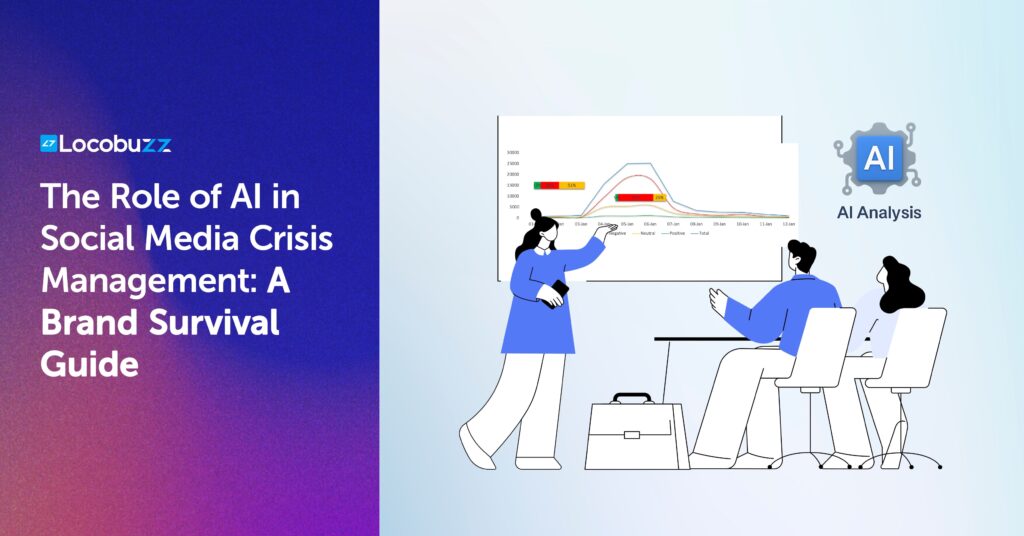
The Role of AI in Social Media Crisis Management: A Brand Survival Guide

Imagine waking up and finding out that your brand is popular on every social media platform, but for all the wrong reasons. A customer’s negative tweet about your brand went viral, or a complaint brought down your brand’s reputation overnight. You will be left wondering how you could have seen it coming. This is where Artificial Intelligence steps in. AI becomes your brand’s fastest responder in times of crisis. For a long time, businesses have faced the challenge of not being able to resolve crises. But ever since the rise of AI, a number of business operations have become easier to manage.  In the context of social media, a crisis occurs when negative information or comments about a brand start to rapidly spread across various social media platforms. Such information has the potential to harm the brand’s public image across the internet. The question here is, how does AI help during this crisis?  Let’s take a look at that: How AI Can Help with Crisis Detection AI has a significant role in crisis detection. It helps businesses identify the possibility of risk beforehand so that it does not turn into a disaster. It reminds businesses to resolve issues before they turn into a problem for the company. Here’s a breakdown on how AI does this: Real-time Social Listening AI-powered social listening tools monitor a large number of conversations about a brand that take place on various social media platforms. These tools monitor brand mentions, negative and positive comments or feedback, hashtags, and any potential mishaps across social media platforms. Sentiment Analysis AI uses Natural Language Processing (NLP) to understand the emotional tone and sentiments of the customers. This language processing model helps in understanding whether the sentiments are positive, negative or neutral. It flags the negative sentiments of the customers, indicating areas where businesses need to make improvements. Irregularity Detection AI-powered tools detect any sort of irregularity on the social media platforms of the brand. These tools learn typical activity patterns and detect any abnormality on the platforms. This alerts the businesses to notice the problem before any crisis occurs. Automated Responses Communication is a crucial requirement during a crisis. AI tools help businesses generate automated responses to common queries and complaints. This helps businesses provide immediate attention to an issue. So far, we’ve understood the role of AI in crisis detection. Now, let’s take a detailed look at the ways in which AI strengthens Social Media Crisis Management. The Role of AI in Strengthening Social Media Crisis Response Artificial Intelligence for Social Media Management has become the need of the hour.  Businesses are increasingly using AI for Social Media. AI has become a powerful tool for: Prevention,  Management and  Recovering from a Social Media Crisis. Let’s break down the methods to get an idea of how AI strengthens social media crisis management based on three key parameters. A. Prevention: Identifying Threats Before They Escalate AI helps businesses in detecting threats or any issues before they escalate and become irrecoverable. Early detection of a crisis saves businesses from a public disaster. How does AI do this? Consumer Behaviour Analysis: AI models predict how consumers would respond to a particular campaign or an ad post before it is published on the internet. Content Risk Analysis: AI conducts an analysis of the content before posting it online. It identifies what type of content would create a risk factor or might come out as controversial for the audience. Predictive Analysis: With the help of past reports of the audience, AI models predict what content would work best for the brand and the audience. B. Management: Responding Quickly and Strategically Once a crisis hits a business, AI takes over and helps businesses manage the situation quickly and strategically. Let’s take a look at how AI does this: Listening to the customers: AI scans all social media platforms and identifies the cause of the crisis. It tracks platforms where the brand is tagged and monitors conversations across all the platforms. Conducting sentiment analysis: AI conducts a sentiment analysis to understand the emotions of the customers. It interprets not just what customers are saying but also how they are feeling. Looking for Influencers and Networks: Influencers have become a trend. Audiences get influenced by what influencers are saying about a brand on various social media platforms. AI for social media tracks which influencer is talking about the crisis and whether they are talking in favour or against the brand. AI also tracks how the information is spreading across social media platforms. Detecting Misinformation: AI helps businesses in detecting false information being spread across the internet. It flags such misinformation and alerts brands to take immediate action to clear it. C. Recovery: Learning, Adapting, and Rebuilding Trust Once the crisis is managed, the next crucial step is to recover from that crisis. Artificial Intelligence for social media provides a well thought out process to recover from a crisis. Post-crisis evaluation: AI tools generate reports on how the customers are responding towards the change of events. The reactions of audiences are noted to get ideas from the customer perspective. Reputation Tracking: Once the crisis is settled, AI tracks the reputation of the brand across different social media platforms. It monitors whether the ongoing sentiments and perceptions of the public towards the brand are improving or not. Crisis Playbook: AI models learn from every crisis that takes place in business. It maintains a detailed record of what worked during the crisis and what was not useful. This way, AI helps social media refine its strategies to avoid a crisis in the future. AI and Social Media Marketing: Collaborative Opportunities To Prevent Crisis Social Media Marketing is progressing fast, and Artificial Intelligence has helped social media gain importance. AI in Social Media Management has been used widely by businesses today. It has helped in significantly improving relationships with customers. Social media’s collaboration with AI is a powerful tool. It helps businesses unlock various new opportunities. Let’s understand how AI

The Role of AI in Social Media Crisis Management: A Brand Survival Guide Read More »

Sentiment analysis

Sentiment Analysis Isn’t Just for Social Media: 5 Unexpected Use Cases in Customer Feedback

Did you know? A study conducted by XM Institute states that consumers with positive emotional experiences are 15.1 times more likely to recommend the brand to customers and 8.4 times more likely to trust the company.  While many focus on likes, shares, and comments to be the metrics of ‘sentiment analysis,’ the truth is that they rarely communicate what customers are really feeling about your brand. Sentiment analysis using machine learning, in today’s day, helps brands understand and act on customer feedback across an array of platforms. It can be detected via support tickets, call transcripts, surveys, product reviews, etc.  Many sentiment analysis platforms like Locobuzz help brands understand how customers really feel about their overall experience with the company. How Sentiment Analysis and Customer Experience Are Connected Understanding what customers are saying is not an easy task. You need to listen to what they are feeling and respond accordingly. A gap in understanding can affect your customer loyalty. Let’s understand more about how sentiment analysis and customer experience are connected. How Sentiment Analysis Detects Emotional Nuances in Interactions Sentiment analysis processes text-based information from emails, chats, reviews, or social media posts to detect whether a response is positive, negative, or neutral. Many tools, such as Locobuzz, have advanced AI systems that improve customer experience using machine learning by going a step ahead to detect frustration, confusion, joy, or sarcasm.  Why a Sentiment Analysis Platform Is the Key to Truly Knowing Your Customers It’s because emotions are the heartbeat of customer experience. A support query might be resolved quickly, but if the tone of communication felt cold or dismissive, the emotional experience may still be negative. Provides actionable insights When you extract & analyze data from different customer touchpoints like support tickets, chatbot logs, or surveys, you start to uncover patterns such as – Is a new product getting positive sentiment or a neutral emotional tone? Are customers frequently frustrated after using a specific feature? Are your loyalty program members expressing more joy or more confusion? These small yet effective cues can help you dig deeper and find ways to improve customer satisfaction. Helps turn feelings into actionable feedback Understanding sentiment helps you take appropriate action and save your brand reputation before a negative customer experience derails the marketing efforts. Brands that use sentiment analysis as part of their CX strategy can: Prioritize high-emotion issues before they escalate Identify experience gaps faster Train frontline teams to respond with empathy Fine-tune messaging, UX, and product experiences How Brands Use Locobuzz Sentiment Analysis: 5 Standout Stories Use Case: Sentiment Analysis in Retail AboutA major electrical goods manufacturer with a nationwide presence and over 20,000 retail partners, operating in a high-volume consumer segment. Challenge Large volume of customer queries and complaints online. Poor sentiment tracking across social media, reviews, and forums. Inability to predict crises based on emotional spikes in conversation. Solution Deployed a Digital Command Center with real-time sentiment dashboards. Used smart sentiment tagging to isolate and prioritize negative chatter. Automated routing of emotional feedback to appropriate teams (e.g., service, legal). Trendspotting to identify growing frustration or praise in specific product lines. Result & Impact Over 6.3 million mentions were analyzed – 525K were sentiment-flagged as actionable. 5.6 million social chatters from competitors helped benchmark emotional responses. 90% reduction in manual effort through automated sentiment mapping. Reviews on Amazon and other platforms shifted toward positive ratings. Brand built a reputation for responsiveness and emotional intelligence. Use Case: Sentiment Analysis in BFSI AboutA growing digital lending platform serving young professionals in India, offering credit cards and quick personal loans. Challenge Massive increase in user conversations across cities. Missed viral and untagged mentions with rising negative sentiment. No visibility into emotional trends around competitor campaigns. Solution Deep sentiment analysis integrated across social media platforms. Special tools to track emotional polarity in both tagged and untagged brand mentions. Weekly sentiment trend reporting across locations and product categories. Comparative sentiment analysis with competitors to identify performance gaps. Result & Impact SLA reduced from 4 days to 1 hour 21 minutes. Negative sentiment decreased significantly with proactive responses. The social reputation score rose sharply as positive mentions increased. Campaign tweaks driven by emotional insight improved engagement rates. Clear emotional insights helped refine content tone and response strategy. Use Case: Sentiment Analysis in Automobile AboutA top global luxury car manufacturer active in India, with a premium customer base and highly visible social media engagement. Challenge Daily inflow of complaints and queries via social media. Difficulty in gauging the emotional tone and urgency of conversations. Inconsistent lead nurturing due to lack of sentiment prioritization. Solution Sentiment tagging of every brand is mentioned to assess customer mood instantly. Quick-response playbooks activated based on sentiment (e.g., frustration, praise, curiosity). Escalation workflows for influencer and high-risk negative sentiment posts. Campaigns were monitored for sentiment shifts to measure real-time audience reaction. Result & Impact Over 140K mentions were responded to; 47K were actionable with sentiment tags. Positive sentiment increased by 27% year-over-year. Brand’s Social Reputation Index outperformed competitors. The average response time was 5 minutes faster than the industry benchmark. Leads prioritized by positive engagement sentiment improved conversion rates. Use Case: Sentiment Analysis in Healthcare AboutA leading private healthcare network in India, with 70+ hospitals and a strong digital presence, supporting millions of patients during the COVID-19 crisis. Challenge High surge in digital queries about treatment, availability, and COVID-related concerns. Difficulty in manually classifying the emotional tone of patient feedback. Need to personalize responses and manage reputation in real time. Solution Advanced sentiment analysis to detect fear, confusion, or trust in patient conversations. Automated categorization of feedback into positive, neutral, and negative segments. Personalized response strategies tailored to customer emotion. Integrated sentiment-based ticket routing and CRM sync for quicker resolution. Result & Impact 63% of tickets responded within 30 minutes; 76% closed in under 2 hours. First-level response time dropped to 6 minutes. Negative sentiment reduced significantly during the pandemic peak. Category mapping led to a 30% drop in irrelevant tickets. Stronger

Sentiment Analysis Isn’t Just for Social Media: 5 Unexpected Use Cases in Customer Feedback Read More »

best-ways-identify-micro-influencers-using-social-listenign

Best Ways to Identify Micro-Influencers Using Social Listening Signals

Finding the right micro-influencers for your brand doesn’t have to be complicated—despite what all the expensive tools and lengthy tutorials might suggest. We’ve put together some simple yet powerful tips to help small and medium-sized businesses easily find micro-influencers using social media listening tools. Before we dive in, let’s take a closer look at what social media listening tools are and how they work. What are Social Listening Tools? Social listening tools enable businesses to monitor online conversations, track brand mentions, and gain insights into audience sentiment. By tracking mentions, keywords, and hashtags, social media listening tools offer actionable data on what individuals are talking about your business or your business sector on the web and social media. Social listening software is perfect for finding micro-influencers. Who are Micro-Influencers and Why Collaborate with Them? Micro-influencers are individuals with 1,000 to 100,000 followers, offering high engagement within niche communities. Even though they have a small follower base, they still deliver high engagement since they have a close relationship with their audience. They create content on only one specific topic, such as travel, fitness, food, or fashion, which is why their followers trust them and find them credible. The trust influences more interaction and improved relations, and that is why brands mostly prefer to work with them. Micro-influencer collaborations are a more affordable and novel choice for firms, particularly the smaller and recent ones. They are easier to contact, more willing to cooperate, and generate more quality material than massive influencers. They make more organic-appearing material, and that is what builds the consumers’ trust in it and can provide a better ROI for your business. Red Flags to Watch When Shortlisting Micro-Influencers While social listening tools help identify potential micro-influencers, it’s essential to evaluate their authenticity and engagement metrics. Many times you end up with the wrong creator that is not suitable for you and your business. The following are some warning signs to look out for: Spam or generic comments Comments like “Nice pic” or emojis on every post might signify spam comments. Off-brand content If their tone, style, or values aren’t aligned with your brand, the partnership might come across as unnatural or pretentious. Inconsistent posting or unexpected spikes Lack of consistency or sudden increase in followers may indicate bought followers or inactive accounts. Low rates of engagement If they have a decent number of followers but very few likes, comments, or shares, their audience may not be active or real. Take the time to look past the numbers. Authentic influence is built on relevance and trust. Steps to Identify the Right Micro-Influencers Step 1. Track Niche Conversations Micro-influencers often post about what they care about. Utilizing social listening tools, you can track social listening KPIs, like what people are talking about, keywords, or hashtags that connect with your brand, and you’ll be able to identify the individuals who are already discussing things that matter to you. It enables you to discover people who are already discussing your niche and have a real interest in the same niche. These are the people you need to reach out to for real, meaningful partnerships. Step 2. Find Frequent Mentions With social media listening tools, you can follow people who are discussing your company or your niche issues. Some users who always talk about your industry, even when they do not have many followers, can turn out to be micro-influencers. By tracking these regular mentions, you can identify people who are interested in your subject matter and can become great advocates for your company. Step 3. Monitor Engagement, Not Just Follower Count When it comes to influencers, it’s not about big numbers; it’s about real connections. Micro-influencers might have fewer followers, but their audiences are often more engaged. With Locobuzz, spot the ones who truly connect with their followers by tracking likes, comments, shares, and even sentiment and reach through advanced social listening features. This helps you identify which influencers genuinely connect with their audience and deliver the most impact. Step 4. Track Trends and Hashtags Social listening platforms allow you to track hashtags and popular topics. Perhaps some users have a small audience, but if they frequently mention your industry, they might be micro-influencers. If you catch on to these consistent mentions, you can discover people who care about your space and could be great brand supporters. Step 5. Analyze Sentiment The majority of social listening platforms have sentiment analysis, and this allows you to know the tone of conversations online. This feature can be used to locate micro-influencers who consistently post positive content on topics that resonate with the values of your brand. Locobuzz, for example, offers advanced sentiment analysis that not only allows brands to measure public sentiment but also identify influencers who organically align with their messaging and values. Step 6. Identify Rising Influencers Social media listening tools enable you to spot emerging influencers even before they reach a huge status. While their followings might not yet be massive, they’re building loyal and active follower bases that appreciate their voice. Locobuzz facilitates this procedure effortlessly by monitoring engagement patterns, conversation dynamics, and growth indicators over time and enabling you to find emerging voices that are truly resonating with their audience. Step 7. Start Engaging Once you have selected potential micro-influencers, social listening platforms provide you with insights on their followers and content, allowing you to quickly access them and initiate the process of building a relationship.  Conclusion Finding the right micro-influencers doesn’t have to be hard or expensive. With Locobuzz’s social listening tools, brands can easily and efficiently identify and collaborate with micro-influencers who resonate with their audience. Start building meaningful influencer partnerships that deliver real impact and drive impactful influencer marketing strategy. Ready to get started? See how Locobuzz can transform your influencer marketing today. Request a Demo

Best Ways to Identify Micro-Influencers Using Social Listening Signals Read More »

how-can-you-build-orm-powered-review-management-system

How Can You Build an ORM-Powered Review Management System That Truly Delivers?

Imagine two fashion brands competing online; both sell fashionable clothes at low costs and spend on advertisements. However, there is a difference between them: Brand A has positive customer reviews, responds to followers on social media, and resolves criticism promptly. Brand B, on the other hand, has negative ratings, ignored comments, and little interaction.  Which one would you trust more? It’s obvious Brand A wins. These days, in this digital age, consumers do not purchase products; they buy into the brand, and trust is established through a solid online reputation. Whether you’re launching a startup or driving an existing business, online reputation management (ORM) is crucial. It influences what people think, they develop trust in it, and it fuels growth. To give you a better understanding, let’s dive into ORM, why it matters, and how to create a review-driven online reputation management system that works. What is ORM and Why It’s So Crucial to Building Trust with Customers Online Reputation Management (ORM) is the process of taking measures to control how others see your company on the web. It includes watching out for reviews, managing customer comments, managing negative incidents, and making sure the best and most positive content about your brand is displayed on search engines. The aim is to make your brand trustworthy and have a strong, positive impact. Why is ORM important? Trust matters. A few bad reviews or overlooked complaints can send potential customers elsewhere, while regular, considerate interaction can build loyalty. Consider ORM as your means of managing the story about your brand, whether it’s in reviews, blogs, or social media. How ORM Transformed a Brand’s Reputation A few years back, a hotel chain began noticing a decline in bookings. Upon investigating further, they understood the issue: negative reviews were accumulating online, primarily regarding staff behavior and cleanliness. Rather than dismissing it, they took action to fix it. They hired an online reputation management service, started responding to all the reviews, and implemented actual changes. Employees underwent new training, and the levels of hygiene were enhanced at all outlets. Meanwhile, they invited satisfied guests to write authentic reviews of their experience. In just a few months, their review scores increased, customers began to trust them once more, and their bookings and revenue bounced back. The bottom line? Listening to feedback and responding to it through effective online reputation management can pay off. Creating a Strong Online Reputation: Step by Step with ORM Tools Step 1: Monitor All Online Conversations About Your Brand First, listen very closely to what is being spoken about your brand on the Internet. This entails watching social media, forums, blogs, and particularly review sites. Good brand reputation monitoring puts you in contact with problems early so that you can address them before they become larger problems. Online reputation management tools such as Locobuzz can assist you in monitoring mentions, grasping public opinions, and keeping you informed in real time. Step 2: Reply Quickly, Truthfully, and Consistently After listening to what is being said about your brand, the second step is to reply. Reply to reviews, social media posts, and messages truthfully and professionally. Whether the feedback is negative or positive, quick and thoughtful replies help build trust. This is where human connection truly matters. A sincere reply can have a far greater impact than any paid advertisement. By using online reputation management software or review management software, you can better track customer feedback and react accordingly through prompt feedback and according to your company’s ethics. Effective tracking of brand reputation allows you to have a good reputation and customer relations. Step 3: Ask for Reviews in a Clever Way Don’t expect customers to review; request them. Right after a smooth purchase or good experience, invite them to provide feedback. Most customers will give a review if it’s convenient and timely. This is where review management software enters the picture. Collecting reviews the right way not only creates your online reputation but also balances out the occasional negative comment. Step 4: Leverage Automation (But Keep It Personal) Automation can simplify daily tasks, such as sending review requests, configuring new mention alerts, or handling simple responses. But, even with automation, your responses must still feel genuine and personal. Most online reputation management tools (like Locobuzz) provide intelligent automation + AI capabilities that keep you efficient without being robotic. It’s all about the fine line between saving time and maintaining the human touch. Step 5: Examine Feedback for Actual Business Insights Each comment, review, or rating speaks volumes. Whether positive or negative, feedback can indicate shared problems, identify what customers adore, and indicate where things need to be improved, such as product quality, service speed, or employee behavior. Taking the time to notice these patterns allows you to make better decisions. That’s where online reputation management services truly come in handy; they don’t simply assist you in managing issues, they assist you in learning and growing from them. Step 6: Stay active and Authentic on Social Media How your brand appears online matters a lot. If your sites are silent or your responses come across as canned, it may lead people to lose confidence in you. To establish a strong presence, keep posting, engaging, and answering complaints or questions promptly and in a genuine human voice. Social media is not only a site where you should market your company; it is also an asset for online reputation management. In order to remain current with your activity, tools like Locobuzz, Hootsuite, or Sprout Social can be employed to schedule postings, monitor mentions, and answer messages all from one tool, so it is simpler to remain connected and consistent. Step 7: Create a Crisis Plan Ahead of Time A reputation crisis may strike at any time, be it due to a defective product, a customer grievance attracting publicity, or rumors going viral on the internet. Having a specific, documented plan gives your team an opportunity to react rapidly and in a composed manner, without panicking

How Can You Build an ORM-Powered Review Management System That Truly Delivers? Read More »

Common gaps in digital customer exp-07

Most Common Gaps in Digital Customer Experience Management and How to Fix Them Fast

Today, having an exceptional product or service won’t guarantee that a brand’s customer experience will be amazing. What truly sets a brand apart is how it interacts with its customers online, from the start to beyond the sale. Customers today have a wide range of options. There are alternatives for every business, product, or service. This is why it is so important for every business to deliver an excellent digital customer experience. A recent study from Microsoft Research revealed that nearly 90% of customers said that they would be more likely to make another purchase after receiving a positive customer experience from brands. What is Digital Customer Experience? As more customers embrace digital platforms, digitizing customer experience strategy becomes crucial to effectively engage and serve a growing online audience. Digital Customer Experience refers to how customers interact with brands through digital channels such as social media, emails, mobile apps, and AI chatbots. It only focuses on the online part of the customer journey to make digital interactions smooth. Why is Digital Customer Experience Management Important? Digital customer experience management improves convenience for customers. It shows your customers that you understand their needs. With the help of digital customer experience management, companies can offer personalized experiences to their customers, which results in increased revenue and customer loyalty.  Netflix is an excellent example of digital customer experience. It consistently gets better to stay ahead in the competitive environment. Rather than simply asking, “Who are our customers?” Netflix asks, “Who is this person, and how can we ensure they opt for us versus other entertainment platforms?” This helps them provide customized experiences and retain audiences.  How to Fix the Gaps in your Brand’s Digital Customer Experience Let’s have a quick look at the most common Digital customer experience gaps & ways to fix them. Limited number of communication channels  Delayed responses and issue resolution Non-personalized experiences Mobile optimization  Ignoring customer feedback  Overwhelming interface 1. Limited number of communication channels Customers expect businesses to offer services across all communication channels. Being present only on 1 or 2 communication channels will not suffice and will create a bad experience. How to fix it – Businesses should start by identifying which channels their customers prefer to connect with the most, whether it is social media, emails, mobile apps, or chatbots. With these preferences in mind, businesses can then start providing support on their preferred channels. All channels should be well integrated so that customer conversations stay smooth and uninterrupted regardless of where they begin. Investing in the right tools and training the support team to manage several channels together can make a huge difference in enhancing customer experience. 2. Delayed responses and issue resolution Customers nowadays expect quick responses and fast resolutions when they contact a company.  When responses are delayed or issues take forever to resolve, it makes them feel neglected and frustrated. It breaks their trust and leads them to your competitors. In a world where convenience is everything, people don’t want to wait for hours or days to receive assistance; they expect prompt and efficient responses. How to fix it – AI chatbots are a great way to fix this. They can answer simple, direct questions in no time. You can also provide self-service options as part of your support desk, which will help customers get a quick response to their queries and also help in reducing ticket volumes.  3. Non-personalized experiences  Personalization is very important in the customer journey. Customers don’t just want to buy your products or services; they also want to experience that personal touch. It makes them feel seen, heard, and understood.  How to fix it- Businesses should try to understand their customers in a better way to deliver a personalized experience. This can be achieved by simple gestures like addressing them by their name, recalling their past interactions with your business, or showing them products that they might like. This shows your customers that you care about them. When customers feel brands know them, they are more likely to return. 4. Mobile optimization If your app or website isn’t optimized for mobile, then you are missing out on a lot of customers. Nowadays, customers mostly browse on their mobile devices, and if your app doesn’t work properly on mobile, then there is a high chance that users will leave and avoid your app or website.  How to fix it – To fix mobile optimization problems, ensure that your website or app functions properly on every screen, especially smartphones. The design or layout of your app should be simple and clean. Don’t clutter your app or website with unnecessary text and loud banner ads. It also helps to keep updating your site or app according to customer feedback. 5. Ignoring customer feedback When customers give you feedback, whether it’s a complaint, suggestion, or compliment, they are providing you with valuable insights. Ignoring that feedback can ruin your chances of getting better and can also make customers feel unheard. How to fix it- To fix this issue, brands should actively monitor customer feedback. Acknowledging their feedback, whether negative or positive, helps improve trust and credibility. You can ask for customer feedback through surveys, emails, and review sites and take necessary action on it before small issues turn into big problems.  6. Overwhelming interface An overwhelming website can be difficult to navigate if there are too many pop-ups, banners, flashing buttons, or large blocks of text. Your customer may get confused or frustrated and leave without taking any action. An unorganized layout not only looks bad but also makes it difficult for users to find what they’re looking for.  How to fix it – To fix an overwhelming interface, keep things simple and straightforward. Minimize too many banners, pop-ups, and flashing buttons that can distract or confuse customers. Structure your content into easy-to-read sections with simple headings so that users can simply navigate to what they need. A clear layout with white spaces makes everything appear more welcoming and less

Most Common Gaps in Digital Customer Experience Management and How to Fix Them Fast Read More »

How to structure your social media portfolio for better results

How to Structure Your Social Media Portfolio for Better Results

Your online presence has the power to make or break consumer trust in the rapidly changing digital world. To stay concentrated, work fast, and be influential, maintaining a well-structured social media portfolio is crucial. Consistency and simplicity are vital methods in watching how people are responding to your posts and adjusting your strategy. You can determine what is succeeding, delete what isn’t, and make sure everything is supporting your overall marketing strategy with an organized social media portfolio. The social media analytics report further allows you to make informed decisions based on real-time results. Let’s take a closer look at what a social media portfolio actually looks like, why it’s essential to manage your portfolio, and how you can make your portfolio even more effective to get quality leads.  What is a Social Media Portfolio? A social media portfolio covers everything your brand does on social media. It includes your social media profiles, posts, campaigns, strategy, and creative content on Facebook, Instagram, LinkedIn, Twitter, and YouTube. It covers the overall visual identity, content themes, posting frequency, audience engagement, and tone of voice. In addition to this, a social media portfolio comprises data you extract from social media analytics. With analytics, you are able to view how your creatives are performing on every channel, thanks to metrics like engagement, reach, and people’s interests. How Streamlining Helps Deliver Better Results When your social media plan is disorganized, everything will appear chaotic. When multiple teams are handling various channels and content, the voice of your brand becomes unclear, and opportunities for meaningful engagement can be lost. With an optimized portfolio, you can utilize fewer resources and maximize the usage of each platform. It eliminates duplicated efforts, makes social media monitoring more effective, and gives you a reliable social media analytics report.  Your performance will improve, your decisions will be data-driven, and your brand will be consistent across all platforms. Steps to Streamline Your Social Portfolio To streamline efficiently, you require a clear plan and a willingness to refine in the process. Here’s where to start: 1. Audit your current social media presence Take inventory of all your active and inactive social media accounts. Be consistent with your branding, messaging, audience interaction, and frequency of posting. Use social media analytics to track the most important measures, such as reach, engagement, and audience composition. Ask yourself questions like, “Which platforms are supporting your objectives?,” “Which platforms are no longer relevant to your organization’s goals?” 2. Set Clear Objectives Every social media platform must serve a purpose. Have distinct, quantifiable goals for every platform. It can be lead generation, brand awareness, customer service, or something unique. The end goal is to keep your work centered around your business objectives and not get sidetracked. 3. Merge or Eliminate Duplicate Channels Be ready to roll back. If a platform is not providing value or no longer supports your brand, think about deleting it or consolidating its content with another platform. Prioritize the platforms that are producing actual results and engaging most with your audience. 4. Be Consistent with Messaging and Branding Maintain the messaging, tone, and imagery of your brand consistent everywhere. Use similar hashtags, color schemes, and logos so that your audience can immediately recognize and trust your brand. 5. Create a Central Content Calendar A shared calendar makes it simple for teams to work together. You can schedule posts, assign roles, and schedule a mix of post types. It also guarantees that your marketing campaigns will run smoothly on all channels. 6. Use Social Media Monitoring for Real-Time Insights Track social discussions with the help of social media monitoring. This helps you react in time and effectively, whether it’s to resolve a possible crisis or spot a brewing trend. With real-time intelligence, you’re able to decide quicker and better. 7. Automate and Review Regularly Use automation tools to schedule, monitor engagement, and create performance reports. By removing repetitive work, your team will have more time to plan and think creatively. Regularly review your social media analytics weekly or monthly to observe what is working and where changes are required. Top Tools to Enhance Social Media Workflow and Efficiency Social media management across several platforms can quickly become daunting. The right tools are what make the job easy for you; they offer a seamless workflow, enhance teamwork with your team, monitor performance in real time, and provide valuable insights through social media analytics. Following is a list of tools that can make and enhance your social media management easy.  Locobuzz: Locobuzz is a powerful social media monitoring and customer experience tool that is packed with user-friendly features. It provides the features of auto-post scheduling, real-time engagement tracking, and creating in-depth social media analytics reports through a user-friendly dashboard. With features such as sentiment analysis, keyword monitoring, and insightful data, Locobuzz makes it possible for brands to stay informed, respond promptly, and maintain branding consistency on all media.   Hootsuite: Hootsuite is a trustworthy website that enables you to track various social media sites, schedule posts, and track conversations. Its user-friendly interface makes it easy to deal with content, while its handy integrations make things easier. It provides a clear indication of what is performing on every platform thanks to its inbuilt social media metrics tool.   Sprout Social: Sprout Social combines post scheduling, content posting, and collaboration in a unified platform. Where it stands out is its customer focus, where CRM tools and responsive, easy-to-use dashboards are part of the offering. Marketers can create elaborate social media analytics reports that provide insightful information on the performance of their content, interactions of customers, and reach of posts.   Brandwatch: Brandwatch is an effective social media monitoring tool that helps brands monitor conversations, trending insights, and sentiment measurement on the internet. It gives you insights that will be useful for keeping your brand’s reputation intact and keeping track of industry trends. If you want to know your audience and improve your brand image, Brandwatch has the potential to

How to Structure Your Social Media Portfolio for Better Results Read More »

social-listening-research

Social Listening Research: How To Analyze Online Conversations For Strategic Insights

People are always conversing online in the fast-moving digital age. They tweet, post, comment, and express their opinions on everything from your company to other topics. But are you truly paying attention to what they say? Social listening studies help with it. It’s not only about reading comments; It’s how Starbucks knows when a drink goes viral. Or how Nike catches backlash before it snowballs. This approach enables companies to know what consumers really think and what their expectations are. Rather than speculating, your audience provides actual, live insights. Unlike basic monitoring, social listening provides you strategy, not only data. It lets you know when people are happy, when they are angry, and what is trending before it goes viral. It can assist you in surpassing your rivals, enhancing your service, and directing your marketing. It helped a fintech brand cut churn by 30% by responding to service complaints within minutes. To remain ahead in a digital-first society, you must listen intelligently. Social listening studies convert unprocessed noise into useful information. When done correctly, it enables you to create more human, smarter, and stronger brands. What Is Social Listening Research, And Why Does It Matter Social listening research is tracking, examining, and reacting to internet discussions about your brand or sector. When a customer tweeted about receiving the wrong meal, a restaurant chain spotted it early, replied in 15 minutes, and turned the complaint into a viral moment of great service. Social listening goes further than standard social media monitoring, which merely counts likes, shares, or mentions. It records the feeling, background, tone, and purpose behind every post or remark. This offers companies a more accurate picture of what individuals really feel, not only what they express. Social listening lets you find typical consumer complaints, compliments, product suggestions, or even changing trends in real time. A good listening approach, for instance, enables your team to react before the issue becomes viral if a consumer tweets about bad service. It transforms comments into quick action. That helps to strengthen ties and make your consumers feel acknowledged. It also enables you to understand what is most important to your audience—what they value, what annoys them, and what they anticipate from you. These revelations are gold for enhancing even your items, support, content, and marketing. Also Read: Social Listening Research: What It Is, How to Do It, and Tools to Use Social listening studies are not only beneficial but very necessary in a digital age where one bad remark can harm the reputation of your company. Launch smarter campaigns. Fix customer pain points before they cost you. Turn digital noise into real-time strategy. How Social Listening Improves Research Real-Time Reactions to Your Product or Campaign Social listening offers real-time knowledge of what individuals are saying. For example: “Thousands of customers on Reddit and X are already venting about your latest update. Survey findings are not weeks away. Customers on websites like X, Instagram, and forums already express their opinions. Their honest views enable companies to See frustration build before it turns into churn. Quicker choices follow from this immediate access. You can change tactics more quickly than with conventional approaches. It also reveals how consumers respond to fresh trends. This guarantees that your study is current and pertinent. Spot What Surveys Miss: The Complaints They Don’t Tell You Many times, consumers express online dissatisfaction not reflected in polls. Social listening lets you find what people lack, like customers begging for resealable packaging or same-day delivery. Unmet demands like these are rich for creativity. Your group can convert grievances into enhancements. It’s a strong approach to influence product creation. Brands that pay attention can address issues before they escalate. Over time, that fosters loyalty and contentment. Reduces Research Time and CostRunning focus groups or hiring agencies consumes time and money. Social listening uses public data to help offset that expense. Insights may be collected without large expenditures. The programs search thousands of internet discussions for you. Tools like Locobuzz scan Reddit threads, X posts, and YouTube comments. Compared to manual interviews, it is more scalable and efficient. Small businesses gain just as much as big ones. You receive quick insights without overworking your team. That’s a victory in both effort and budget. Reveals genuine feelings and sentimentOnline users are more outspoken than in polls. Social listening catches that unfiltered, emotive response. It reveals not just what individuals say but also how they feel. Sentiment analysis lets you gauge dissatisfaction or enjoyment. Many studies lack this emotional depth. Tracking emotion over time helps one to observe trends. That enables you to evaluate which messages perform best. It also provides background for your data. Enhances Product and Campaign DecisionsMarket research directs what to launch or modify. Social listening speeds up and strengthens this direction. Change features if you notice users grumbling about them. Should a campaign not be well-received, change fast. People tell you what they want; you don’t have to guess. It also lowers risk prior to releasing major concepts. When you know what to listen for, you’ll ship less guesswork and more hits. That raises the likelihood of success. Monitors Rival Viewpoint Social listening is not only about your company. You may track what others say regarding rivals as well. Do they love something you don’t provide? Do users grumble about their service? This information enables you to distinguish more clearly. You can either avoid their errors or fill in their holes. It’s like reading their customer support inbox in real time. Competitive analysis results in better placement. Supports Personalized Marketing Knowing more about your audience helps you to speak to them better. Social listening lets you categorize consumers by interest and activity. You will understand what products or subjects mean most to them. That helps your marketing to be more useful and focused. Customers value companies that “understand” them. Customers trust brands that listen. Social listening makes them feel heard before they ever hit ‘submit’ on a complaint form. Personalization boosts interaction

Social Listening Research: How To Analyze Online Conversations For Strategic Insights Read More »

social-listening-smarts-crisis

How Social Listening Powers Smart Crisis Management in the Age of Social Media

A minor problem on social media can spread swiftly in the fast-moving digital sphere of today. Within hours, one negative post or remark might become a catastrophe. That is why businesses have to remain vigilant and monitor online user comments.  Social listening fits here. It involves tracking what others say about your brand, product, or service using smart technologies. Enabling you to grasp how your audience feels and spot early warning signals of danger. The correct technologies let you track consumer feedback, hashtags, and mentions in real-time. These methods let you see growing negative feelings before they become significant PR issues. Social listening also enables you to react more quickly and intelligently. You get real-time data, therefore supporting it.  This post will show you how social listening interacts with crisis management. You will also see how companies may remain prepared and safeguard their reputation in trying times. Social Listening for Crisis Management Social listening involves closely monitoring what others say online about your business, rivals, and sector. It’s not only tracking mentions; it’s about knowing the background, tone, and feeling behind those mentions. Social listening is a potent weapon when employed for crisis management. It enables companies to spot problems as they develop, well before they become common concerns. Monitoring talks helps businesses to know how their brand is seen in real-time. Social listening programs monitor brand phrases, hashtags, and even unintentional references. This implies that even without tagging your brand, their remark still gets highlighted. Using sentiment detection, these solutions can examine customer perceptions of your brand. Every emotion counts amid a possible crisis—positive, neutral, or negative. Social listening turns into the first line of defense in crisis management when done regularly. It informs you what people are angry about, what is popular, and what requires your focus. Brands that actively listen are better equipped to react and safeguard their reputation. Social listening, in brief, is insight rather than only data. It enables your crisis management team to respond quickly, clearly, and confidently. In a digital-first society, listening is leading. Real-Time Monitoring: Its Role in Preventing PR Disasters Real-time monitoring enables companies to keep one step ahead of a possible PR disaster. Constantly searching social media, forums, blogs, and news sources for any mention of your company, it functions like a digital radar. The mechanism notifies your team right away if a damaging claim, complaint, or viral post starts gaining traction. This lets companies act fast before the problem spirals out of control. In the digital realm, when one tweet or post may become global in minutes, every second counts. Real-time tracking enables you to react immediately should a consumer register a complaint. Should a rumor begin to circulate, you may quickly clarify the facts. This degree of response demonstrates to your audience that you are in charge and care. It demonstrates responsibility and helps to safeguard the reputation of your brand. Real-time tracking also detects sudden surges in anger, sarcasm, or fear of early signs of outrage cycles or misinformation campaigns. Your first alert can be a quick increase in unfavorable emotion. AI and NLP (Natural Language Processing) driven tools catch these changes and alert you immediately. Crisis management operates on the principle that delay causes harm. Quick action is preventative. Brands that monitor in real-time cut response time by 70% and are 3x more likely to resolve issues before they escalate publicly. It prevents catastrophes from arising from issues. Real-time monitoring brands are better equipped, more responsive, and finally more reliable. Also read: Global Social Media Listening Market Forecasted at $14.21 Billion by 2028, Driven by Business and Government Adoption Amid Rising Social Media Usage. How Sentiment Analysis Finds Crises Before They Explode Early indicators of disaster are often identified by means of sentiment analysis. It enables companies to know not just what individuals are saying but also how they feel about it. Sentiment technologies monitor emotional changes across thousands of posts regardless of whether the tone is positive, negative, or neutral. Crisis management depends on this. A PR crisis may be indicated by a quick increase in negative attitude. These technologies in real-time scan tone, slang, vocabulary, and emoticons. They look for emotional background beyond language. Sentiment tools pick up on trends, for instance, when consumers use irritated language or furious emoticons. Your team is then alerted by that data to look into and react. Before the bad wave spreads, brands can act early. At this point, addressing problems is easier and more efficient than delaying. It may be as easy as saying a clarification or addressing a worry. When done on time, this can prevent larger issues and potentially convert dissatisfied consumers into loyal ones. Consistent sentiment analysis helps allowing marketing teams to recalibrate messaging tone leading to 2x engagement on follow-up content. This incorporates compassion into your reaction to a problem. Knowing how individuals feel enables you to message, thereby shaping it human, timely, and reliable. Key Components of a Good Crisis Response Strategy Your First Line of Defense is Proactive Listening Proactive listening is the first point for a good crisis strategy. This calls for ongoing social media tracking for brand mentions, keywords, and consumer comments. Real-time notifications and sentiment analysis tools let you spot changes in public opinion early.  Catching these warning signs before they worsen lets your team act quickly. It’s about respecting your audience, not only about preventing catastrophe. Listening intently demonstrates to your consumers that you appreciate their voice and are willing to assist them when it counts most. Construct a Cross-Functional Crisis Response Team It’s essential to have a committed team ready before any problem develops. Your crisis response team should have leaders, legal, marketing, customer support, and PR included. To prevent misunderstanding in high-pressure circumstances, everyone should have a well-defined function.  Designate a team leader in charge of decision-making and communication. Having backup team members educated in case someone is unavailable is also smart. This system guarantees quick action in an actual crisis and synchronized reactions.

How Social Listening Powers Smart Crisis Management in the Age of Social Media Read More »

Book free demo !

Personal data will be processed in accordance with Locobuzz’s Privacy Policy