live-webinar-locobuzz

Webinar on | 26th Sep - 11am IST​

Scaling AI for CX Leaders

From Adoption to Measurable Impact in 7 Days

Days
Hours
Mins
Secs

Uncategorized

how-brands-use-ai

How Brands Use AI in CXM to Predict Customer Needs Before They Arise

Imagine reaching out to a customer and fixing a problem before they realize it exists. That would solve so many issues for the customer and your brand. The customer would always view it as a positive experience. Before AI, achieving this was difficult. But, today, pre-emptive & predictive CX is a possibility. AI can analyze massive streams of data and get a better understanding of customer needs. Modern customer experience management (CXM) systems use machine learning and predictive analytics to identify patterns in purchase history, browsing behavior, and social conversations. This helps brands anticipate intent, predict when customers may churn, and even detect early signs of dissatisfaction. When integrated into your digital customer experience management strategy, AI ensures every engagement feels timely, relevant, and empathetic. There was a time when customer feedback came in the form of surveys or feedback forms. This was ineffective in predicting customer needs precisely. If you wish to track customer experience on social media, artificial intelligence for social media helps businesses understand customer preferences and behaviors. This ensures a better experience for tomorrow and not just today.  How does AI predict customer needs? AI processes complex datasets within seconds. It can improve your software efficiency to a point where the CX becomes seamless. Here’s how AI can predict customers’ needs as well. Understanding behavioural analysis Machine learning algorithms analyze a customer’s habits over time. This is valuable because once you understand a customer’s habits, you can predict their needs better. You also get a better understanding of how often a customer engages and what kind of content they prefer. It anticipates intent and creates better recommendations based on the customers’ needs and behaviours Using data-driven Insights Every like, share, and comment today leaves a digital footprint. Artificial intelligence for social media can aggregate this data to get a comprehensive view of a customer. This combined data can help understand a customer’s emerging interest, early dissatisfaction, or spending habits. This is done by uncovering any hidden patterns and signals. By getting a good understanding of customer behavior, a brand can act with precision and planning to better predict its needs. Sentiment Analysis Tracking how people view and speak about your brand is essential. AI looks at sentiment across languages, platforms, and cultures. It captures not only the words but also the emotions behind them. For example, artificial intelligence for social media can decode customer sentiment from reviews, chats, or social media posts. Any change in sentiment is an opportunity for brands to intervene by resolving dissatisfaction or amplifying the positive experience. Better AI predictive intelligence can help understand potential problems like service outages, delivery delays, or account issues before they impact the customer. Instead of waiting for complaints, the CXM platform systems could alert service teams to lead with communicating the problems. Using AI to understand needs ensures that a negative experience switches into a positive one, building brand loyalty and trust. Personalized experience at scale AI can personalize the customer experience for millions of customers simultaneously. It can suggest products better and help campaigns target customers better. AI can offer a better understanding of customer preferences to help anticipate what individuals need, ensuring that all interactions are uniquely crafted rather than being generic and a one-size-fits-all approach. Locobuzz is a customer experience management platform that captures and analyzes interactions across multiple channels, helping you truly understand your customers and their needs. SignalSenseTM is a powerful AI capability offered by Locobuzz that detects shifts in sentiment and identifies early signs of volatility across brand mentions. By uncovering emerging trends and potential issues before they escalate, SignalSense™ empowers companies to take proactive measures, resolve challenges faster, and stay ahead of the curve. Shaping future customer journeys today Incorporating AI into your digital customer experience management platform is no longer optional, it is the foundation for successful businesses. By predicting a customer’s needs before they arise, brands can build confidence, ensure convenience, and foster care. In this world where loyalty is fragile and choices are abundant, experiences powered by AI are what customers will love and respond to best. You can not only meet expectations but also exceed them. The brands that win tomorrow are the ones that can predict today.

How Brands Use AI in CXM to Predict Customer Needs Before They Arise Read More »

how-sentiment-analysis-tools-handles-multilingual-challenges-min

How Sentiment Analysis Tools Handle Multilingual and Cross-Cultural Challenges

Sentiment analysis tools must navigate the complexity of multiple languages and cultures. From handling sarcasm and idioms to interpreting regional slang, AI sentiment analysis combines machine translation, language-specific models, and human insight to deliver accurate understanding across markets Every language speaks an emotion. Understanding that emotion and decoding the meaning behind it is essential to understanding what people are trying to say. All across the world, people speak different languages. Each of these languages has unique idioms, and cultural cues. This is where Sentiment analysis tools come into the picture. They help decipher the meaning behind these nuances and ensure that the correct and intended message reaches the audience.  Praise in one country can sound like sarcasm in another. Businesses all over the world face the challenge of decoding customer intent and emotion correctly, but the right tools can help massively. They can help you get accurate customer insights and detect risks early, as well as create and track better campaigns.  Here are the ways that AI sentiment analysis tools can be used to handle multilingual and cross-cultural challenges. Capturing Local Sentiments with Region Specific Data A great and effective sentiment analysis tool doesn’t just extract universal data, it analyzes local data by checking mentions across different platforms. The system can help you learn how the local people talk. This reduces misinterpretations, and when the system is trained on local inputs, it can help understand the use of idioms, metaphors, and regional humor. This ensures that nothing gets lost in translation. A campaign may be a success in one place, but that might not be the case everywhere.  Decoding Nuances Across Cultures for Accurate Insights Different cultures have different ways of talking and expressing emotions. Language is not just words, but it is the way people convey how they feel. Sarcasm and irony change through different languages, but there is always meaning behind them. For eg, a sentiment analysis tool for Facebook can understand multiple languages and nuances within those languages. It can accurately show how your brand’s sentiment changes over time. You can understand and look at specific topics that are being spoken about by highlighting certain keywords and the analytics tools will understand whenever those keywords are mentioned. This means you can look at what is being spoken and interpret it better. Measuring Sentiment Consistently Across Global Markets For a global brand, measuring sentiment isn’t about getting a single universal score, it’s about understanding how each market feels in its own cultural context. Looking only at one overall sentiment score and applying it everywhere is not just misleading, it’s ineffective. What resonates positively in one country could fall flat or even be criticized in another. With the right sentiment analysis software, brands can listen to millions of conversations at once and then segment the insights by region and language. Instead of saying “positive” or “negative,” the system reveals different sentiment changes for different markets, showing exactly how audiences across the globe respond to the same message. Keeping track of the competition Tracking competitors is essential if you wish to succeed. These tools can give you an understanding of how the sentiment for your competitors evolves over time, and you can compare it against your own. You can check how your competitors perform across different languages. You can also conduct market research in a new area for a new product by seeing how your competitors have performed, and get a better understanding of how the market is responding to it  A powerful AI-powered CX platform like Locobuzz can perform sentiment analysis in multiple languages. The platform can capture idioms and expressions. Locobuzz integrates millions of multilingual conversations from social media, review sites, and community platforms to understand the customer intent better. This gives brands a clear view of their global audience and what people feel, even if they all speak in different languages. Understanding culture and emotion In a world where one word can mean praise in one culture and criticism in another, understanding sentiment across languages isn’t just a technical challenge, it’s a business necessity. This is essential to building a loyal global audience worldwide. Every language speaks an emotion, and understanding this emotion is valuable. It reads between the lines and understands how different people communicate. Good sentiment analysis tools don’t just hear what people say but actually listen to them.

How Sentiment Analysis Tools Handle Multilingual and Cross-Cultural Challenges Read More »

how-to-perform-social-media-competitive-analysis-min

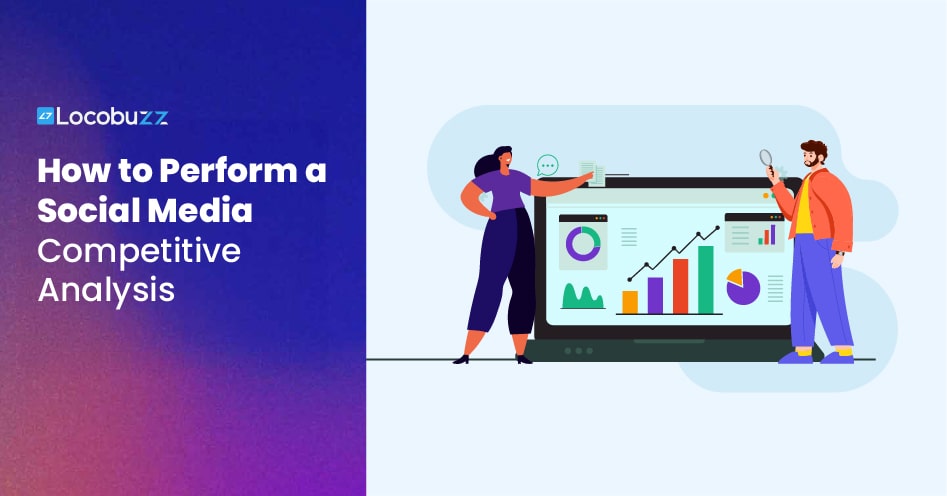
How to Perform a Social Media Competitive Analysis

Performing a social media competitive analysis helps brands understand competitors’ strategies, audience behavior, and content performance. With AI-powered monitoring, you can uncover insights that guide smarter campaigns. Competition on social media is fierce. Brands today are looking for ways to keep their audience engaged and understand what keeps them hooked. If you aren’t aware of what your competitors are up to, you’re already lagging behind. Social media can be decoded in a way that it doesn’t have to be a guessing game, but rather you can use competitive social insights to drive better decisions and create content that is aligned with what audiences want to view.  Social media monitoring tools can help you understand your competition better and gauge the pulse of the overall market. You can analyse this data and carve a more strategic & data-driven path for your brand.  Here are some steps you can use to perform a social media competitive analysis. Identifying key competitors To start out, find 3 to 5 competitors who have the same target audience. You don’t have to track every competitor, but focusing on the right ones can be very important. Among those key competitors, try to add industry leaders so you understand who sets the benchmarks. It is also vital to look at emerging players and see what new strategies they use that are worth tracking. Social media monitoring can help you get a good understanding of how your competitors work. Set up social listening to listen to those competitors Social listening can be tracked by checking brand names, product mentions, and industry keywords. By analyzing reactions to their posts, you gain valuable insights into what resonates and what doesn’t, helping you shape your own content strategy more effectively. There are listening dashboards that can be used to capture every mention of your competitor, getting a better idea of the sentiments people have about the brand online. Compare engagement metrics Numbers tell a powerful story. You can get a better understanding of what resonates with your audience. If they have more impressions, you can review why it happens. For Example, if you perform an Instagram competitor analysis. You can measure the competitors’ posting frequency and check which posts get the best response. You can also track likes, shares, comments, and retweets by performing a social media content analysis to track what the competitors are doing and why they succeed. Generate reports and insights Once you gather all the data, you can turn it into real and actionable insights by creating structured reports. A good report shows more than just numbers. You can understand where your competitors are strong, where they fall short, and where your brand can step in to shine. Comparing your competitors’ reports against your own can help you see shortcomings and gaps. You can then take the necessary steps to improve and get better results. Understanding competitors’ strategy A content analysis tool can help understand the posts that competitors use. You can track how the response changes with reels and static posts. A social media campaign analysis helps understand the ones that drive the most buzz. When you better understand their strategies, then you can create something similar for your own brand. Analyze sentiment and customer perception Sentiment analysis is essential to see what complaints and praises surface. You can track if the mentions are positive, negative, or neutral. Having good sentiment can always lead to better engagement, and monitoring customer perception can be vital in learning how you stack up against your competition and comparing whether it improves over time. Locobuzz has some of the best tools for social media monitoring. It gives brands a complete view of their social media analytics in one platform. It tracks brand and product mentions across multiple channels and languages. It uses powerful AI and machine learning to decode audience sentiment and uncover key trends, influencers, and customer perceptions.  ContextualPulseTM is powered by AI to help understand the customer’s emotion. It can understand sarcasm, urgency, etc. This helps understand the sentiment of your brand and how it compares to your competition.  SignalSenseTM is also a useful AI-powered capability that can identify sudden shifts in sentiment and alert you regarding any emerging issues that might affect you or the competition. This can help identify problems early and get an upper hand by solving them fast.  By comparing reach, campaign performance, and engagement, Locobuzz helps highlight areas of strength, expose gaps, and show areas to grow. That’s useful, isn’t it? Most importantly, Locobuzz transforms raw data into actionable insights, helping brands adapt quickly, sharpen their content strategies, and maintain a competitive edge. Tracking your competitors is a smart move. At the end of the day, social media competitive analysis is about gaining clarity. When you track a competitor’s performance, listen to customer sentiment, and study content strategy, this data can be used to uncover insights and make smarter decisions. You can use data from social media monitoring to learn and innovate.  By identifying strengths and spotting gaps in the industry, you can learn about successes and failures and understand what to implement. This can help you make smarter marketing decisions to gain loyalty and engagement.  Your competitors’ mistakes & failures can be the source for your brand’s success. So, do what’s working and steer away from what’s not. Don’t just watch your competition, learn from them and outshine them.

How to Perform a Social Media Competitive Analysis Read More »

Why Effective Customer Response Management Starts with Social Listening Insights

Customers today want it all. They expect an instant response that is tastefully personalized. A late reply can quickly turn into negative sentiment that can affect your brand. But, here’s the tricky part! Responding quickly cannot come at the price of quality. Customers share their thoughts on Twitter, vent on forums, drop reviews, and even make indirect mentions that never hit your inbox. The only way to keep up is by using AI-powered social listening and crafting responses directed towards them. Your team needs to respond faster, prioritize better, and build richer customer profiles. Here are some ways where social listening insights can be a boon to your brand! 1. Helps understand conversations before they reach you The main function of social listening is to analyze the sentiment in the market and bring you raw insights specific to your brand. Customers do not always tag the official handle when they mention the brand. This is where social listening insights can analyze data by tracking keywords, product names, or campaign hashtags. Today, AI-powered social listening can help you find out your customers’ complex sentiments such as annoyance or sarcasm. This helps improve the customer response management system, as it understands what people are talking about in every context. 2. Provides context-rich insights to form better responses A basic CRM system can tell when a customer is unhappy. However, the best social listening tools can help reveal why they feel that way. These insights can help with tone of voice, triggers, and sentiments. It also helps to understand the sentiment in the industry. This data helps the CRM teams form replies that are empathetic, personalized, and solution-oriented. 3. Prioritizing what matters most Social listening can help brands identify which conversations need attention. You understand the most critical issues when you identify reach, context, and sentiment. ou can also understand opportunities for engagement. This happens because while showing individual comments, it also points out how they connect to trends, brand reputation, and customer emotions. Thus, helping the customer response management team set priorities and respond where it matters the most. 4. Turning insights into empathetic responses Using context can help a brand move beyond traditional replies and craft responses with empathy and understanding while keeping brand voice in mind. Good responses are vital because they show customers that the brand is listening and responding with intention. This can improve loyalty, trust, and the entire customer experience. 5. Measuring impact and continuously improving Social insights let you check how your brand image is being shaped in real time. You can use this data to improve your CRM system to respond more efficiently. You can see in real time how implementing insights can change shifts in sentiments. This is because good responses improve brand image tremendously. Social listening can be an ongoing cycle of learning and improving, as the interactions themselves improve the market sentiment. 6. Helps build a richer customer profile A traditional CRM captures emails, support tickets, and purchase history. Building a rich customer profile can be very useful as you get insights on more than just basic customer information. You can understand a customer’s interests, behaviors, and opinions. These individual responses also help the database in making more personalized responses, tailoring offers, and engaging in ways that a customer can resonate with. Locobuzz unifies customer conversations from social media, forums, reviews, and messaging channels into one platform. With AI-driven sentiment and trend analysis, it tags and prioritizes issues – from urgent complaints to influencer mentions and feeds them directly into your CRM through automation and integrations. The end result? Faster, more contextual responses and richer customer profiles with insights on interests, sentiment, behavior, and urgency. Locobuzz has some of the best AI-powered social media listening and monitoring tools.  ContextualPulse understands customer emotions. It captures sarcasm, praise, frustration, or disappointment with precision. SignalSense reads tone, emotion, and influence & sends out alerts to the relevant stakeholders. This helps understand what is shifting in the market. It helps see negative sentiment or other issues that might escalate. ResponseGenie generates automated brand-aligned responses based on customer history and knowledge base. AgentIQ helps guide the agent drafting replies by showing them whether their reply will affect CSAT or not. It trains your agents and helps improve customer retention in the long run. To summarise Social listening insights lead to stronger customer relationships. This ensures that important issues are not missed, leading to more meaningful engagement. In a world where every customer voice matters, you can ensure your brand listens first, responds better, and builds stronger relationships. This leads to customers who are satisfied with your brand and advocate for it. So, build CX systems that usher you into the modern AI era by anticipating problems before they arise, measuring campaign impact, monitoring brand image help respond effectively, and crafting contextual responses.

Why Effective Customer Response Management Starts with Social Listening Insights Read More »

How Social Media Analytics Tools Drive Smarter Marketing Decisions?

Every like, share, and comment tells a story. But, if your analytics is not showing you the right data, you are missing out on crucial insights that affect your brand reputation.  The digital marketplace is extremely competitive today, and simply posting the content won’t work. Across all platforms, brands that have made real-time analytics a priority have seen a 30 percent increase in engagement metrics. This is a significant jump, isn’t it? The right tools can help you stand out and get an edge over your competition.  Let’s take an example. We’ll assume that you own a small cozy cafe in Mumbai. You start posting so that you can make people aware of your cafe. When you use social media analytics tools to check your posts, you notice that latte art posts get a lot more likes than menu updates. For your future social calendar, you use this information to focus more on latte art posts because they received a better response. This response will lead to more impressions.  That’s the power of social media analytics tools when used correctly. Now, let’s look at all the ways you can use social media analytics tools to drive smarter marketing decisions. 1. Get a better understanding of audience behavior. Your company may post a lot, but not every post will perform the same. Social media analytics tools can measure the posts that perform better and help you get details about your audience. Factors such as age and gender can affect the way your audience interacts on social media. You can understand if your audience is just viewing the content or if they are interacting with it as well. How does this help drive smarter marketing decisions? Understanding audience behavior can reduce efforts by ensuring better marketing decisions. It helps you decide what to post, where to post, how to say it, and who to target. This is a strategy based on real data, not assumptions.  2. Analyse data to measure ROI in campaigns A valuable part of social media analytics tools is showing a true return on investment of campaigns. Analysing this data can show us which campaigns deliver strong returns and which ones underperform. A marketer can see exactly how many leads or signups came from a specific post or platform. How does this help drive smarter marketing decisions? A social media campaign analysis can drive smarter marketing decisions by helping focus on the campaigns that have the most ROI. 3. Create a benchmark based on the competition Your competitors are fighting for the same audience’s attention that you want to reach. Therefore, it is crucial to monitor the efforts your competitors are making in the industry and assess their effectiveness. It is useful to create a benchmark based on the competition, especially when they do well. Social media analytic tools help you analyze the data by tracking how often the brand is being mentioned, the sentiment around those mentions, and how it compares to yours. How does this help drive smarter marketing decisions? These social media market research tools can help you make smarter marketing decisions by spotting gaps and opportunities to get an edge over them. This will help you know where not to invest & where to put the money in. 4. Understanding current trends and predicting future ones Social media analytics tools help understand what is happening in real time. We get an understanding of how audiences react to certain topics, optimal content forms, or trending hashtags. Analytics can help identify trends before they become mainstream by looking at sentiments and different demographics. How does this help drive smarter marketing decisions? You can make smarter marketing decisions by using analytics to stay relevant today and act fast by predicting future trends. The tools guide smarter decisions by turning social listening into an advantage. 5. Specialising in content for local audiences Different content triggers a different reaction from people across locations. Social media analytics tools help marketers understand these differences by breaking down engagement by geography, language, and culture. Brands can use this data to localize more effectively. Metrics such as language, tone, and cultural relevance can impact performance on your social media. How does this help drive smarter marketing decisions? By specializing content for local audiences, marketers avoid one-size-fits-all messaging and instead deliver campaigns that feel personal, timely, and culturally aware – leading to stronger engagement and higher conversion rates. This is where Locobuzz’s Social Media Management Analytics comes into the picture. The platform offers performance tracking – allowing businesses to monitor engagement metrics, sentiment analysis, and campaign effectiveness across various social channels. The customizable dashboards can be used to visualize key performance indicators, identify trends, and make data-driven decisions promptly. Competitive benchmarking features can help brands check their performance against peers or competition, ensuring that they stay ahead. Locobuzz helps organizations enhance their social media presence by integrating these analytics into daily operations.  The bottom line is… Without analytics, you’re missing opportunities and possibly letting your efforts go in vain. So, craft strategies based on analytics and  turn data into actionable insights, and help your brand by: Understanding audiences more deeply Measuring what truly works Learning from competitors Staying ahead of trends Connecting with local markets in authentic ways Market research for social media Social media analytics acts as the foundation for making smarter marketing decisions, gaining a competitive edge, and improving your brand reputation. Using this data, you, too, can thrive in the era of AI and gain an edge in the industry you operate in.

How Social Media Analytics Tools Drive Smarter Marketing Decisions? Read More »

How Integrating Chatbots with Social Listening Enhances Customer Insights

How Integrating Chatbots with Social Listening Enhances Customer Insights

Chatbots and social listening have always worked in silos. One engaging with customers in real-time, the other monitoring conversations from afar.  Bring them together, and it can help brands move customer insights from surface-level to deeply actionable. How does this shift take place?  Chatbots help in capturing signals – customer intent, frustration, and emotional tone. Social listening identifies these signals and analyzes the pattern in them. Combined together, they give customer insights that are context-driven and action-ready.  What does this mean for you? It helps you understand your audience better. You don’t just understand what customers are saying, but why they say it, and how you can respond to it in real-time.  However, social media listening and monitoring tools weren’t always this powerful. Before its integration with chatbot marketing, it followed a one-way process. With the rise of AI, social media listening tools have evolved drastically.  The Evolution of Social Listening: Before & After Chatbot Integration Before, only listening to conversations was a passive activity. It captures signals, but doesn’t complete the feedback loop. But, when chatbot marketing is integrated with real-time social listening, this loop closes.  Customer data is observed and acted on in real-time, enhancing customer response management. Basic social media monitoring got transformed into proactive AI-powered social listening for real-time insight generation. Before: Traditional Social Listening Fragmented view of customers Customer data sources were limited to tweets, reviews, hashtags, mentions. While these were useful, they created an incomplete view. Reactive social media monitoring Brands spotted issues only when a customer reached out or when the issue had already escalated. By this time, the brand’s image was already damaged. Shallow sentiment analysis Social media listening tools flagged sentiments as positive, negative, neutral, but missed urgency, loyalty signs, and intent One-way process Traditional social media monitoring tools only tracked conversations and social media listening tools only listened to conversations. Both tools didn’t engage with customers in real-time. Slow time-to-action Even when insights were generated, teams took a lot of time to analyze text and interpret tone. This delayed the decision-making time and actions were taken too late. After: Social Listening with Chatbot Integration Unified customer intelligence Chatbot conversations were fed into social media listening tools, combining public chatter and one-on-one conversations, giving a 360-degree view. Proactive customer engagement Instead of waiting for problems to rise, chatbots started to capture them first. This meant brands could resolve issues before they escalated, protecting loyalty and reputation. Richer contextual insights Chatbots detect urgency, context, and customer intent. With social media listening tools it gives: what customers feel, why they feel that way, and how it’s spreading. Two-way engagement loop Chatbots engage instantly while listening tools analyze patterns, making conversations smarter and personalized. Real-time actionability With chatbot marketing integration into social media listening tools, spikes in conversations trigger instant alerts to teams- enabling faster resolutions, lower churn, and higher satisfaction. How Chatbot Integration with Social Listening Enhances Customer Insights By combining two critical data streams – chatbot conversations, which give one-on-one customer conversation insights and social listening, which gives public, market-wide insights, brands are able to enhance customer insights.  Chatbot marketing integration with social media listening tools helps in capturing not just sentiment but also customer intent, tone, urgency, and loyalty signals – delivering richer and contextual customer insights. On one hand, chatbots engage instantly, while on the other, listening analyzes patterns of those conversations to create smarter and more personalized interactions – enabling continuous improvements through customer insights. Issues that are tagged through chatbot conversations trigger alerts and automate workflows for better customer resolutions, enabling real-time actionability on customer insights. With continuous customer insights incoming from both streams, brands are able to anticipate customer churn, buying readiness, and personalize messages in advance. Beyond immediacy, integration also creates a closed-loop learning system, where every chatbot interaction enriches the listening engine. Over time, this builds a self-correcting cycle that improves both customer engagement and response quality. Finally, it allows brands to balance the market pulse with customer depth. Social listening highlights macro shifts across industries, while chatbots surface micro-level friction points from individual customers. Together, they provide a 360° lens into both broad trends and personal experiences – the dual perspective that drives real competitive advantage. Among the many customer response management platforms available today, Locobuzz stands out as a powerful omni-channel customer engagement platform.  The platform takes social listening beyond tracking mentions by combining it with AI-driven analytics and intelligence. It unifies every customer touchpoint, listens to what customers are saying, and gives brands the ability to uncover intent, urgency, and emerging trends while engaging with customers proactively. The platform highlights patterns and pain points – enabling brands to anticipate churn, optimize campaigns, and refine products in real-time. It is one of the best customer engagement platforms that most brands trust today.  The Competitive Advantage Instead of relying on static reports, dashboards, or disconnected engagement, brands can capture intent, sentiment, and feedback the moment they surface, and respond with context that drives conversions and loyalty. For this to become possible, brands need to integrate chatbots with social listening tools today. This is the key that can help them turn scattered conversations into actionable customer insights.  If brands want to win today, they must treat every customer interaction as a conversation as well as a strategic data point. By integrating proactive chatbots with social listening, you don’t just engage with customers, but understand them at scale – and that is your biggest competitive advantage. 

How Integrating Chatbots with Social Listening Enhances Customer Insights Read More »

role-of-ai

The Role of AI in Enhancing Brand Engagement Online

Today, AI is revolutionizing every industry. And, as a marketer, what really matters is understanding the direct impact that AI has on customer engagement, loyalty, and conversions.  Let’s break this down. Your customers don’t keep track of how many posts your brand publishes. But, they do remember posts that felt personal, the instant responses that solved their problems, and the offer that landed exactly when they needed it. The engagement you create with your audience matters the most. So, are you a brand that customers remember? Or are you still trying to find your brand voice? If you are the latter, then you are not using AI to its full potential.  AI in brand engagement ensures that you are right where your customers need you. It takes every customer touchpoint, whether it’s social media, email, chat, or advertisements, and turns it into a chance to build positive brand engagement.  If your current engagement strategy is not able to help you reach your customers at the right time and place, AI is what you need to close this gap and win over customer conversations.  The Engagement Gap that AI Solves Slow responses, generic replies, and inconsistent engagement cost a brand more than they realize. AI helps brands in eliminating this gap by making engagement faster and smarter. How AI-powered brand engagement creates lasting value: 1. Instant Responsiveness – Higher customer trust and retention AI in brand engagement ensures that every query, mention, or complaint, is addressed in real-time, building trust and reducing churn. Brands using AI in customer service see an average of 8x returns. A digital customer experience management platform can help brands achieve this level of ROI. 2.Personalization at scale – Increased engagement and conversions AI has the ability to create tailored recommendations and responses across channels, turning buyers into repeat customers. Brands using AI-powered personalization state that there is 2x increase in customer engagement and 1.7x higher conversions. An AI-powered social listening tool can help brands achieve personalization at scale.  3. Consistent experiences – Better brand equity Whether it’s social media, email, or news portals, AI makes sure that your brand voice is consistent across every channel. An AI-powered omni-channel customer engagement platform can help your brand deliver consistent experiences and build brand equity. Proactive engagement – Improved sales ROI and revenue growth By predicting customer needs before they are expressed, AI opens opportunities for upselling and cross-selling. Brands that invest deeply in AI across marketing and sales see 10-20% higher ROI. Social media listening tools can monitor conversations, and AI-powered social listening can help brands predict customer needs and achieve growth. The Role of AI in Enhancing Brand Engagement Online Customers want a brand that understands them, acts in real-time, and delivers conversations that feel human even at scale. That’s exactly where AI is transforming engagement.  Deeper understanding of customer signals Artificial intelligence for social media is extraordinary. It analyzes and understands customer conversations, uncovering sentiments, intent, and context. With AI, brands are able to react with precision and insights, turning conversations into a chance to strengthen loyalty. Empowering teams to engage smarter AI doesn’t replace human agents, it empowers them. It automates repetitive responses and brings out insights that matter, so teams can focus on high-value conversations. The best part? It helps agents achieve high-quality CSAT scores and improve significantly. Consistent & personalized conversations at scale AI ensures that the right tone, message, and personalization are applied, every single time, whether it’s a tweet, a review, or support ticket. It drafts responses that are brand aligned, using your brand tone, knowledge base and customer history. Continuous learning from engagements With every conversation, AI grows smarter and sharper. It identifies what resonates with the audience the most and feeds those insights to different teams. This helps in making future interactions more insight-driven and successful. If brands want to boost brand engagement online, one of the best things they could do is use artificial intelligence for social media management, brand monitoring, and social listening.  There are several social media listening tools that comprise all these features together in one single platform. Among several social media listening tools, Locobuzz, a digital customer experience management platform, is helping brands boost their online engagement. Its intuitive & next-gen AI features include –  ContextualPulse decodes customer emotions, intent, urgency, and loyalty in real time – capturing nuances like sarcasm, praise, frustration, or disappointment with precision. SignalSense ensures you never miss what matters by tracking the most relevant conversations and triggering instant alerts, so your team not only knows what’s happening but also understands why it’s happening.  ResponseGenie that acts as an AI co-pilot, drafting brand-aligned responses based on knowledge base and customer history. AgentIQ that guides replies with real-time CSAT and quality scores.  Together, these AI capabilities of the platform empower brands to truly transform every customer interaction into meaningful engagement.  Why AI Matters in Brand Engagement Customers today want brands to interact with them. And, artificial intelligence for social media management is making that expectation a reality by helping companies listen deeper, respond faster, and engage smarter. That’s why AI for social media management plays a significant role in brand engagement.  AI is no longer just optimizing engagement online, it is transforming customer experiences completely. What used to feel like scattered and generic interactions has now turned into real-time personalized conversations at scale. Today, brands that are embracing AI aren’t just improving engagement, but also creating unbreakable trust, improving retention, and growing at a pace that competitors can’t match.  By implementing artificial intelligence for social media and customer experience, brands are driving results that lead to stronger trust, higher retention, and successful business growth.  

The Role of AI in Enhancing Brand Engagement Online Read More »
how-effective-customer-response-boosts-brand-min

How Effective Customer Response Management Boosts Brand Loyalty

Studies have constantly shown that customers are more loyal to a brand that responds quickly and meaningfully. Are you a brand following these practices?  If you aren’t, you are missing out on the biggest opportunity.  Your customers don’t remember every detail of your product. But, they will remember how you treated them in their greatest hour of need.  If your responses are slow and tone-deaf, customers will walk away. But, if your responses are fast and thoughtful, customers are likely to stick around and tell others why.  Your brand can create a real difference in digital customer experience management with the way it responds to customers. Because, your customers don’t just remember what they bought, they remember who they bought it from.  This is the reason why effective customer response management has moved from a support function to a strategic pillar of customer experience management. Why Brand Loyalty has Become the Biggest Currency in Today’s Market Products and prices are no longer your differentiators in the market. Your competitors can match both. What they can’t match is the loyalty and trust that your brand earns. Several studies show that loyalty drives revenue faster and more efficiently. Don’t believe us? Let’s take a look at few statistics: 1. Retention beats acquisition Accruing a new customer can cost your brand 5-7x more than retaining an existing one. Increasing retention by just 5% can boost profits by 25-95% (Demand Sage) 2. Loyal customers spend more Repeat customers spend 67% more on average compared to first-timers. (Adobe) They are also more likely to try new products and upgrades from your brand. 3. Response quality defines loyalty 78% of customers say how quickly and effectively a brand responds directly impacts their loyalty. (Salesforce) A single poor customer service makes 32% of customers walk away from a brand. (PwC) 4. Loyalty program drives growth Brands with strong loyalty programs grow 2.5x faster than competitors. (Accenture) A loyal customer is likely to bring in a new customer with zero acquisition cost. Customer loyalty isn’t just a good-to-have metric, it’s your strongest currency. Every response and interaction will help your brand either add or remove a loyal customer.  How Brands Build Loyalty Through Smarter and Effective Customer Response Management Customer loyalty is not earned through grand campaigns, it’s built through small moments when your customers reach out and your brand chooses how to respond.  Turning Speed into Reliability Your customers see fast, empathetic responses as a form of respect. A quick acknowledgement, even before resolution, shows attentiveness and assures customers that their concerns matter. This simple gesture from your brand acts as a strong sense of reliability, which is an essential foundation for building loyalty. Elevating Responses into Relationship Builders Good CX management doesn’t just mean solving an issue immediately. It’s more than that. It is also about anticipating needs, providing clarity, and offering proactive next steps. These small gestures help your brand turn responses into loyalty-building experiences. Balancing Empathy with Authority If your replies feel generic or robotic in tone, your customers catch that, and they often think they are not valued. By combining empathy with authority, you create confidence. Your customers feel heard and trust you to solve their problems. Using Data to Personalize at Scale Template-based or scripted responses don’t build loyalty. By using past interaction data as insights, your brand is able to create unique responses for every customer. This level of personalization helps you win over your customers’ trust and long-term loyalty. Feeding Continuous Improvement Every customer interaction carries data, what frustrated them, what delighted them, and where the conversation got scattered. Brands that use these insights as a source of intelligence can refine products, services, policies, and communication strategies effectively. This feedback loop helps in customer experience management and continuous improvement. Among a few well-known omni-channel customer engagement platforms, Locobuzz stands out as one of the number one choices of brands today. The CXM platform strengthens customer response management with excellent AI-powered features ContextualPulse, ResponseGenie, and Agent IQ among many others.  Contextual Pulse has the ability to decode intent, context, and emotional signals in real-time. It helps brands understand customer conversations better with context. ResponseGenie adapts to the tone and personality of the brand, creating responses that are brand-aligned. Agent IQ helps agents predict their likely CSAT scores, and guides them in real-time. When combined, these features help brands resolve issues faster, build trust and loyalty, and create a competitive edge. Why Every Response Shapes Loyalty Brand loyalty is not won by products; it’s built through effective customer response management. Customers are quick to leave when they feel ignored, but they are willing to stay when they feel valued. This is exactly why response management should be seen as an important asset for building and nurturing meaningful relationships. Locobuzz, an omni-channel customer service platform, is helping brands transform every interaction into an opportunity for strengthening customer relationships and trust. So, the biggest lesson for brands is – In the long-run, loyalty will be built stronger through meaningful conversations and less through transactions. 

How Effective Customer Response Management Boosts Brand Loyalty Read More »

how-to-measure-campaign-effectiveness-min

How to Measure Campaign Effectiveness with Social Media Analytics Tools

Your brand might be spending lakhs on a campaign, but how do you know if it was effective or not? Without tracking a campaign’s effectiveness, it’s extremely difficult to know whether the effort has paid off or if it’s just burning your budget.  The truth is that social media success is not defined by how much you spend on a campaign or how creative your advertisement looks. It’s about the impact your campaign has created on your customers as well as your business.  The impact is measured in the form of: Did your message reach the right audience?  Did it spark engagement, shift perceptions, or drive conversions?  These are questions that show the effectiveness of your campaign. They separate vanity metrics from results. That’s how social media analytics tools are best used by brands to perform social media campaign analysis effectively. The 5 Pillars of Campaign Effectiveness Measurement To truly understand how a campaign becomes truly effective, look beyond basic metrics. Measuring effectiveness means evaluating campaigns across five key pillars.  Visibility Visibility tells you how far your campaign has reached. It shows a campaign’s effectiveness by measuring metrics like reach, impressions, and share of voice.  Engagement Engagement is measured by tracking clicks, shares, comments, and time spent, showing the brand-specific content that creates the most engagement. Sentiment Sentiments allow a brand to understand if the sentiments of customers towards your campaign are positive or negative. This pillar is critical for brand reputation. Conversion Conversion measures campaign performance through leads, sign-ups, sales, and downloads. It routes the outcomes back to specific campaigns or channels, showing brands exactly what drives ROI. Impact Impact focuses on long-term value – helping brands track repeat purchases, advocacy signals and capturing the true impact of the campaign. How to Measure Campaign Effectiveness with Social Media Analytics Tools? Social media analytics tools help brands by making campaign measurement easy and data-driven. Prove Impact with Clarity A campaign’s success doesn’t rely on assumptions. With social media monitoring tools, you can connect activity – likes, shares, and mentions to business outcomes – leads, sales, and loyalty. This gives you a clear view into how the campaign has created an impact and driven growth. Maximize ROI For every channel, the campaign drives different results. No campaign delivers the same revenue. By tracking performance across channels, you get to know exactly where your budget generated the highest ROI. This helps you make smarter investments and get better results channel-wise. Protect Brand Reputation A campaign is sure to attract attention. This attention is either positive or negative. By monitoring sentiments and creating custom alerts, brands get to know spikes in criticism, misinformation, or potential criticism instantly. These insights can help brands protect their reputation. Understand Your Audience Better Social media analytics tools analyze the patterns in how customers engage, what content resonates, and which message generates a spark. This insight helps your brand tailor campaigns to create a stronger impact. Benchmark Competitively Only measuring your campaign performance in isolation isn’t effective. It doesn’t show the complete analysis unless it’s benchmarked with industry competitors. Comparing performance against them can show your brand where you are leading the conversation, and where you need to get stronger. Turn Data into Strategy Social media monitoring tools have the ability to transform raw data into clear insights. Such insights from one campaign can help you frame your next campaign better and smarter. It helps brands build a cycle of continuous improvement instead of just guesswork. If brands are looking to ace social media analytics and measure campaigns effectively, Locobuzz, an AI-powered platform, stands out as a comprehensive analytics and monitoring tool that truly enhances campaign performance. Its real-time tracking provides brands with actionable data on campaign performance – from reach and engagement to sentiments and impact. Teams can use automated alerts, competitive benchmarking, and customizable dashboards to protect brand reputation and drive measurable ROI.  Measuring Campaign Effectiveness is Key to Social Media Success Brands can know if their efforts and budget are driving any results only when they measure a campaign’s effectiveness through the five pillars – reach, engagement, sentiment, conversions, and impact. They show the true impact created by a campaign.  A social media analytics tool gives brands the advantage of real-time dashboards, customer insights, and competitor benchmarking, allowing them to refine strategies and maximize ROI. The right social media campaign analysis tool will help brands achieve the business and campaign goals they are looking for – making it a must-have arsenal in your brand toolkit.

How to Measure Campaign Effectiveness with Social Media Analytics Tools Read More »

social-media-listening-platforms

Top 5 Industries Benefiting from Social Media Listening Platforms in 2025

Whether you are running a retail chain or a global airline, your audience is constantly talking about your brand online. And, across every industry, one thing is clear your customers expect to be heard.  From fintech to healthcare, the industries that are leading in 2025 are the ones using social media listening to close the gap between what customers say and what businesses do. But, keeping up with millions of conversations across platforms isn’t manually possible.  This is where brands, such as yours, can gain a competitive advantage by using social media listening platforms. These platforms utilize AI to analyze sentiment, discover trends, identify pain points, and track shifts in customer preference for your next campaigns. Industries that are actively using these social media listening platforms are leading the competitive landscape. Is your brand a part of this transformative wave?  Top 5 Industries Using Social Media Listening Effectively Here are 5 best industries using a renowned social media listening platform to their advantage. 1. Retail & E-Commerce If your brand belongs to a retail & e-commerce space, then this is how you can turn social media listening service to your advantage. Capture Customer Feedback Instantly & Turn Them Into Insights From delayed shipping complaints to packaging appreciation, every customer interaction online becomes data. With listening tools, retailers can utilize feedback to refine logistics, and even return processes, enhancing brand trust and retention. Spot Emerging Trends Before the Competition Does Social media listening platforms identify growing consumer preferences for brands. By tracking trending keywords and influencers, brands can introduce in-demand products faster than its competitors. Get Instant Reactions To Your Campaigns in Real-Time By using social media listening platforms, brands are able to track how customers respond to seasonal sales, influencer campaigns and new launches – in real-time. Brands are able to get immediate feedback on what’s working and what’s not. 2. BFSI (Financial Services) If your brand belongs to the BFSI sector, then this is how you can use social media listening to your advantage. Decode Public Sentiment on Financial Products & Policies By using social media listening tools, brands can instantly track public sentiments around loans, insurance policies, or mobile apps. Brands can understand what features users like the most, and where confusion or dissatisfaction exists.  Catch Early Signs of Fraud Through Conversations Frauds and scams have become very common in the banking industry. Due to this, brands utilize listening tools as early warning systems and spot signs of phishing scams, impersonation attempts, or fraud-related customer complaints. Spot Service Gaps Before Customers Walk Away Social listening tools give your brand complete visibility on the performance of your customer service teams. Brands are able to monitor if queries are being answered effectively or if customers end up leaving due to frustration. 3. Automobile If your brand belongs to the automobile sector, then this is how you can use social media listening to your advantage. Get Quick Insights on New Vehicle or Feature Launch Social media listening tools lets your brand identify features that car buyers talk the most about. These insights on vehicle features enables your brand to prioritize design and engineering decisions based on your customers’ likes and preferences.  Track Customer Sentiments Post-Purchase Social listening tools allow brands to monitor what customers are saying about their experience, dealer service and overall vehicle performance. This feedback loop helps brands in creating loyalty strategies.  Decode Buyer Emotions and Fuel Smarter Strategies Some car buyers prefer performance, some fuel economy while others prefer tech. With social listening tools, brands can segment sentiment by model, location, or buyer type, so you can tailor campaigns for maximum impact. 4. Healthcare If your brand belongs to the Healthcare sector, then this is how you can use social media listening to your advantage. Track How Customers Feel About Your Care Social media listening platforms help your brand understand how patients truly feel  about your hospital, doctors, or pharmacies. By tracking social conversations, brands are able to identify pain points in appointment systems, wait times, or staff behaviour. Spot Health Concerns in Real-Time Before They Become Issues Whether it’s a query related to a new vaccine or confusion about a medicine, social listening tools can help you surface topics that customers are worrying about. This allows brands to step in early with accurate and calming information.  Extract Customer-Centric Data To Build Campaigns That Resonate Emotionally From mental health stigmas to women’s wellness, social media listening tools help you understand how different groups talk about health. Brands use these insights to create highly targeted and empathetic health campaigns. 5. Travel & Hospitality If your brand belongs to the travel & hospitality sector, then this is how you can use social media listening to your advantage. Decode Location-Specific Sentiments to Personalize Experiences Social listening tools help brands in evaluating traveler sentiment by destination or property. This enables your brand to personalize service offerings and tailor marketing messages based on those sentiments. Spot Negative Sentiments Instantly Before They Go Viral On social media, problems like overbooked hotels or misplaced luggage easily get out of hand. Brands can prevent these problems from becoming a crisis by using social listening platforms to react to them in a matter of seconds. Find Authentic Voices & Content That Drive Engagement Travel influencers, very often, share their experiences on social platforms. Through social media listening tools, brands can identify key content creators, and find UGC that can be leveraged for marketing purposes. Among various social media listening service providers, Locobuzz is an AI-powered customer experience platform that brings all your social media conversations into one intuitive dashboard. Its real-time sentiment analysis, trend detection, and competitor insights allow brands to track more than just mentions keeping you ahead of the competition. The platform enables marketing, CX, and crisis teams to quickly respond to consumer input through customisable alerts, dashboards, and automated reports.  Conclusion Social media listening is not just a nice-to-have, today, it has become a game-changer for brands. The most successful brands are not

Top 5 Industries Benefiting from Social Media Listening Platforms in 2025 Read More »

Book your free demo now

Book free demo !