Skip to content
Picture this:
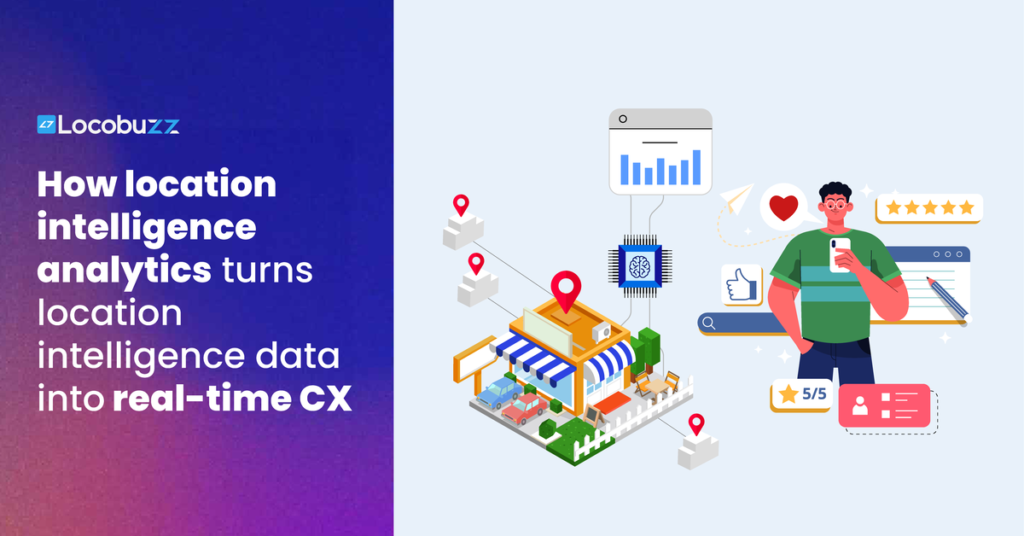
A retail brand discovers that one of its outlets has twice the footfall of other outlets within the company, but it cannot handle the extra customers. They don’t get this information from reports but from real-time live location signals showing more customers and behavioral shifts. After seeing this data, the brand optimizes staffing, inventory, and promotions to meet the increased demand before customers begin to complain about long queues or waiting times. That is the power of location intelligence analytics data in real-time CX.
Brands can now use AI-powered location intelligence to understand not only what customers are saying about a specific location but also how it compares to other outlets in the area, as well as other brand outlets. These insights can help identify regional trends, emerging issues, and location-specific customer needs with far greater accuracy. Brands can track spikes in discussions across cities, monitor how sentiment varies by region, and pinpoint areas where there are service gaps, product issues, or demand surges occurring.
How analytics turns data into real-time CX
1. Understanding customer context in the moment
Location intelligence analytics interprets location data to tell brands what customers need in a particular place. This enables create better and more strategic experainces baed on what what customers want. By constantly monitoring these contextual cues, brands can shift from generic messaging to a more location-specific message as well. Smart location intelligence is a sign of smart real-time business intelligence.
2. Powering real-time personalization
Real-time personalization is where location intelligence stands out. Instead of relying on generic segmentation or old behavior data, brands can tailor experiences based on where the customer is ‘right now.’ This isn’t personalization that feels forced; it’s helpful, timely, and rooted in real-world context, making every customer interaction feel intentionally crafted.
3. Predicting issues before they appear
One of the biggest benefits of location-based intelligence is the ability to see trouble before customers do. When footfall surges, queues form, delays accumulate, or unusual movement patterns emerge, location analytics detects these shifts in real-time and makes the necessary adjustments so that customers do not have negative experiences. Instead of teams reacting to complaints, they get alerted early enough to prevent the problem altogether. Staffing can be adjusted, resources can be rerouted, and communication can be sent without customers ever feeling the friction. It is like having an early warning system for CX one that quietly removes obstacles before they turn into frustrations.
4. Enhancing operational responsiveness
Location intelligence data doesn’t just help make decisions – it accelerates them. When there’s an increase in visitors at a retail outlet or a sudden drop in activity at a service center, brands can identify the issue and respond with precision. This is what helps with real-time business intelligence. No more slow escalations or blind guessing. Operations can move quickly and on time, ensuring every location runs smoothly and remains aligned with customer needs. The result? A brand that feels fast, coordinated, and consistently in control.
5. Creating a real-time feedback loop
This is where location data combines with social sentiment, reviews, and customer interactions, helping brands visualize how people feel in different situations. A spike in negative sentiment in one store or one location outperforming another everything can be tracked. All these combined lead to the best practice model. This continuous feedback loop means brands can monitor CX in real time, intervene faster, and understand what happens exactly at different places. It turns every location into a living dashboard of customer experience.
6. Driving smarter demand forecasting
Real-time Location intelligence data gives brands a clear picture of how customer activity occurs throughout the day, week, or season. By analyzing patterns in football, peak interaction times, and location-specific demand, companies can accurately forecast inventory needs, staffing levels, and service capacity. This ensures products do not go out of stock, wait times stay low, and customer expectations are consistently met.
Locobuzz is a powerful CX platform that delivers advanced location intelligence analytics, enabling brands to connect what is happening on the ground with what customers are saying online as it unfolds. Instead of waiting for weekly reports or store audits, locobuzz captures conversations, reviews, complaints and sentiment from customers in physical locations. When brands can detect emerging issues like long queues, poor service, stockouts, or negative staff interactions before they escalate the necessary action can be taken to maintain a positive customer experience. Locobuzz also highlights positive moments, top performing outlets and service patterns worth replicating across regions.
Conclusion
Location intelligence today has transformed the way brands track outlets across locations. By decoding real-world context to understand what people are experiencing in the moment, brands get a clear idea of what matters the most in the moment. It empowers teams to personalize their experiences with accuracy, anticipate issues before they surface, and optimize operations across locations. This creates a dynamic feedback loop that continually strengthens CX.
Since speed, relevance, and responsiveness define customer loyalty, location intelligence becomes the competitive edge that turns everyday interactions into meaningful and memorable experiences.